Visiting Saba by Yacht
Arriving, clearing in, and diving with Sea Saba from Fort Bay
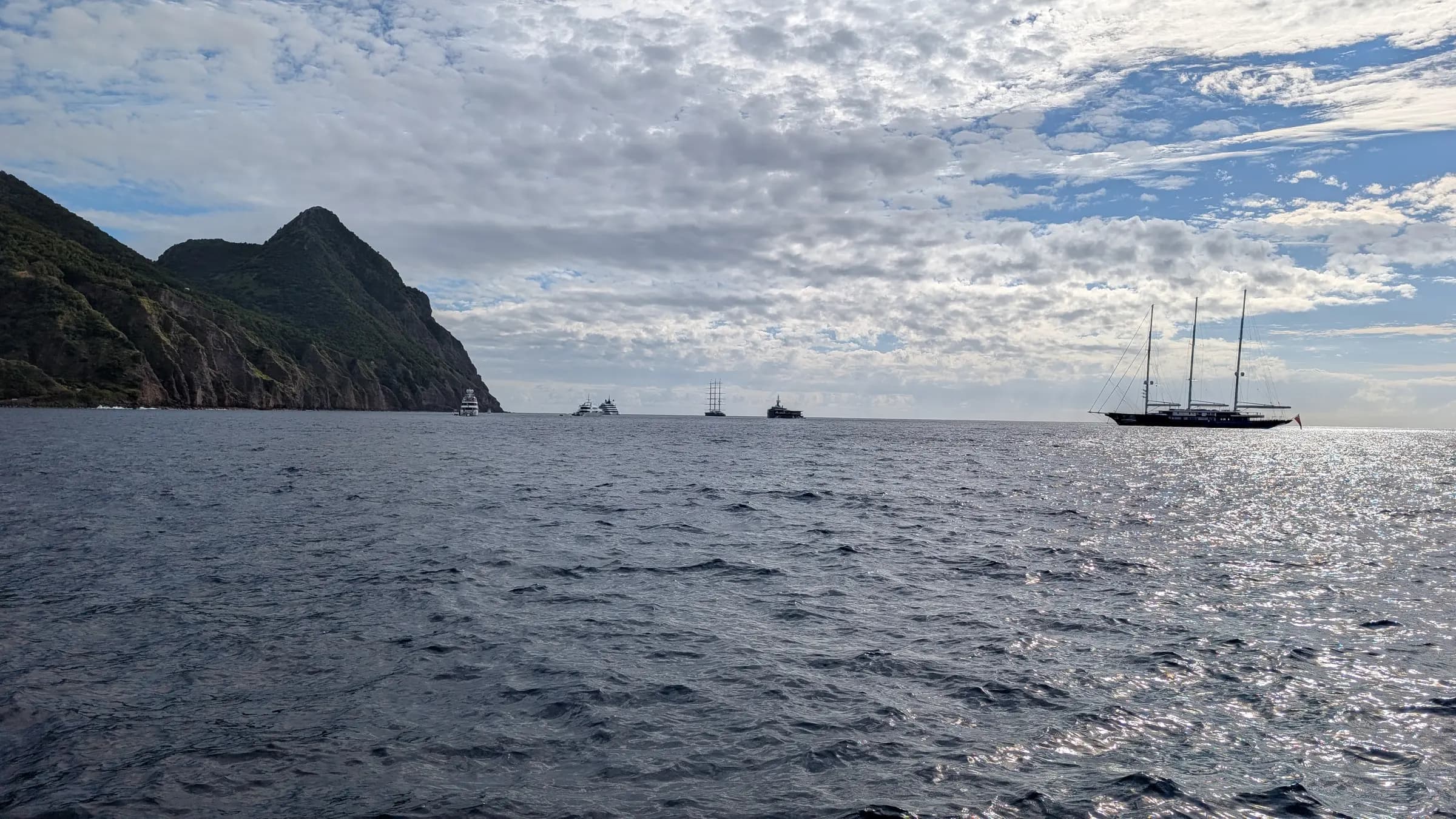
Cruising yachts and sailboats stop at Saba every season for diving, hiking, and a few days ashore. This page covers the practical side of that visit: where to secure your vessel, how clearance works, and how to dive with us while you're here. We work with everything from cruising sailboats to superyachts.
Sea Saba is a dive center at Fort Bay Harbor, not the port authority. Harbor, customs, immigration, and Marine Park rules are set by the Public Entity Saba and the Saba Conservation Foundation, and they can change. We link to the official sources throughout, and we recommend checking them before arrival.
Arriving on Saba by Yacht
Fort Bay, on Saba's southwest coast, is the island's harbor and the port of entry for visiting vessels. The Public Entity Saba and the Saba Conservation Foundation both direct arriving yachts to proceed to Fort Bay as soon as possible. We strongly advise against coming ashore anywhere else: Well's Bay, Ladder Bay, and Cove Bay can be treacherous in sea conditions that look calm from aboard your vessel.
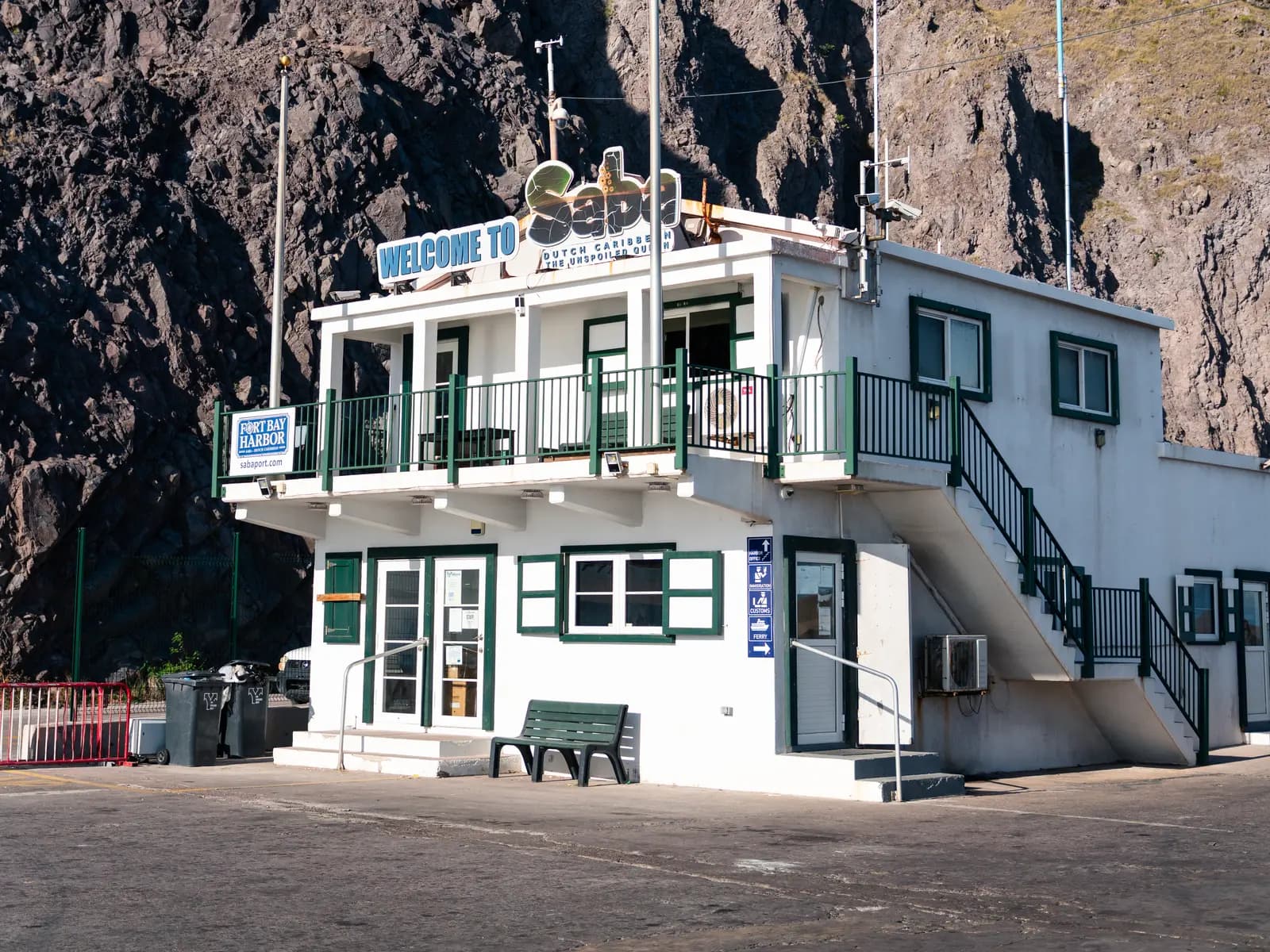
The clearance sequence published by the Marine Park:
- 1Secure your vessel on a mooring or the check-in buoy
- 2Dinghy to Fort Bay
- 3Clear Customs and Immigration
- 4Check in and out with the Harbor Master
- 5Register your yacht at the Saba National Marine Park office, also at Fort Bay
The Harbor Office is open from 7:30 AM to 6:00 PM; if Customs and Immigration aren't available when you land, proceed there directly. The Harbor Master monitors VHF channel 16. Entry forms for customs, immigration, and yacht registration can be completed in advance.
Official sources for current requirements:
Moorings & Anchoring
The Saba National Marine Park circles the entire island from the high-water mark down to 60 m (200 ft), so almost everywhere you'd stop counts as park waters. The park is managed by the Saba Conservation Foundation, and mooring and anchoring are their rules, not ours.
Yacht Moorings
- ✓Yellow moorings are for visiting yachts up to 20 m (66 ft) or 50 t
- ✓First-come, first-served; they cannot be reserved
- ✓Maximum stay of seven days on a mooring
- ✓Red and white moorings are reserved for licensed dive vessels
Anchoring & Fees
- ✓Anchoring is only allowed in designated anchorage zones, never on coral or in recreational dive zones
- ✓Yacht fee: $3 per person (vessels over 100 tons: $0.10 per ton)
- ✓Nature fee: $1 per visitor per night, charged at yacht registration
Telling the Moorings Apart
This part is our local guidance, not regulation. Looking at the buoys around Fort Bay from your dinghy, here's how to tell what's what.
- ✓Public yacht moorings have a single pickup line, with the floats attached directly to that pickup. These are the moorings visiting yachts use.
- ✓Private local moorings fill most of the space directly in front of Fort Bay, and they're not for visitors. A typical one has an A-4 style fender as the surface buoy, two mooring lines running down from it, and two pickup lines with fish-pot-style floats. There are two pickup loops on purpose, and the floats sit on the lines rather than the loops because two pickups can twist together.
- ✓White buoys with a blue stripe are dive-site moorings, not yacht moorings. They're pinned directly to the reef, so they don't have the shock absorption a yacht mooring has, they aren't intended for leaving a boat unattended, and they aren't rated for most sailboats. An apparently unused white-and-blue mooring is not a place to secure your yacht.
Moorings can't be reserved by guests or by Sea Saba. It's uncommon for every suitable visiting-yacht mooring to be taken, but availability depends on the season. Larger yachts generally anchor in the designated anchorage areas; the yacht moorings aren't designed for their size. If you want to know what the moorings and conditions look like before you arrive, ask us. Current fees and mooring details are published by the Saba Conservation Foundation ↗ and the mooring fee schedule ↗.
Saba's harbor infrastructure is also expanding. The Black Rocks Harbor project ↗ is now under construction. We'll update this guide as the new harbor's yacht facilities and operating procedures are finalized.
Coming Ashore at Fort Bay
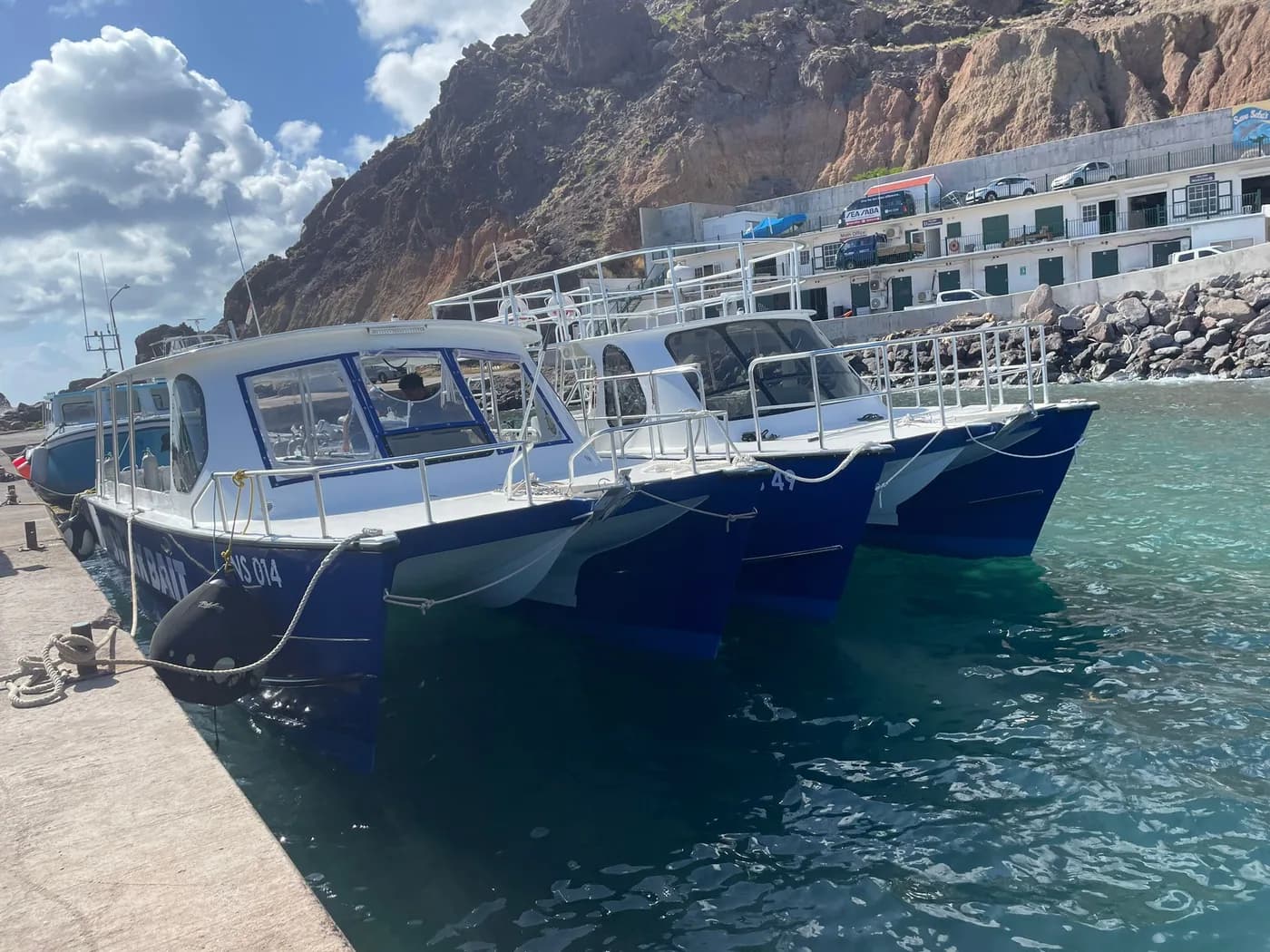
Everything you need on arrival is at Fort Bay: Customs and Immigration, the Harbor Office, the Marine Park office, and us. Fort Bay is Saba's only harbor, and Sea Saba's dive center at 66 Fort Bay Harbor sits close to both piers. Walking the full length of the harbor takes about five minutes.
Dock space and dinghy landing arrangements are the harbor's domain. If you're unsure where to leave the dinghy, ask at the Harbor Office when you check in. If you have a lot of gear to move, we can run it between the dock and the shop on our flatbed trucks.
Sea Saba monitors VHF channel 10; that's the channel for reaching the shop and our boats. We also keep a watch on channel 16, but that channel belongs to the Harbor Master and emergency traffic, so use 10 for us.
Need to get online while you're ashore? We run an open guest Wi-Fi network at the Fort Bay office. Join through the guest portal and you get about 12 hours of access. It covers the area around the shop; don't count on it out on the moorings.
Dinghy & Dive Boat Safety: Give Dive Boats Plenty of Room
When passing a dive vessel, stay at least 150 meters to seaward, especially when the Alpha flag or dive flag is flying. Do not squeeze between a dive boat and the shoreline.
Divers may be completing safety stops in shallow water and can be well away from the boat, so keeping close to shore is not the safer route. We've had close calls with dinghy propellers passing over divers while trying to hug the shoreline. Keep your propeller well away from the diving area and pass on the seaward side. The Marine Park publishes this as a safety regulation in its yachting brochure ↗.
Diving with Sea Saba from Your Yacht
The standard approach is to leave the yacht on its mooring, dinghy into Fort Bay, and join one of our scheduled boats. Bring your gear straight to the dive center. We can store it between dive days, and backup equipment is close by if anything gives you trouble. Our trips depart from and return to Fort Bay Harbor, so there's no hotel pickup to coordinate. Just be at the dive center about 30 minutes before the boat leaves. Rental equipment is available, a dive computer is required on every dive (rentals available), and groups stay small at a maximum of 8 divers per guide.
In some situations we can arrange a pickup from your vessel for the later dives of the day. It's not practical for the first dive, and it depends on your position, the conditions, and the day's schedule. If that would make your visit easier, ask us in advance rather than counting on it.
After diving you're welcome on our normal scheduled shuttle into town, and we can help coordinate taxis for anything beyond that.
The same diving requirements apply to yacht guests. For scheduled diving, the Marine Park and hyperbaric chamber contribution of $4 per diver, per dive appears as its own line item on your Sea Saba invoice. On a private charter those diving-related costs are included in the charter price. Mooring, yacht registration, and harbor fees are always handled separately, directly with the Marine Park and the Harbor Office. The full guide to our trips, certification fit, equipment, and park rules is on the Diving page.
Classic 2-Tank Dive
Two relaxed guided dives; departs 10:30 AM. Our most popular trip and the right fit for most certified divers.
Book Classic DivingAdvanced 2-Tank Dive
Our earlier 9:00 AM trip for more experienced divers, with access to advanced dive profiles when conditions allow. Eligibility: AOW + 20 logged dives OR OW + 50 logged dives.
Book Advanced DivingAfternoon 1-Tank Dive
A single afternoon dive departing 1:00 PM. Easy to add around your arrival or departure day.
Book Afternoon DiveAfternoon Snorkel Trip
Non-divers in the crew can join the afternoon boat and snorkel while the divers are below.
Book SnorkelingWant the boat to yourselves?
A private charter gives your crew exclusive use of a Sea Saba boat, crew, and guide, with pricing that includes the diving itself. For larger vessels, a Sea Saba guide can also dive with you from your own tender.
See Private Diving OptionsBooking and timing
- ✓Book ahead where you can. Space on scheduled trips depends on availability, and we can't promise same-day seats.
- ✓Published pickup times are for hotel guests. From a yacht, be at the dive center about 30 minutes ahead of the boat's departure time.
- ✓When booking online, include your vessel's name in the booking notes. If you'd rather not, send us a quick note or WhatsApp afterward.
- ✓Either way, we need to know you'll be meeting us at Fort Bay rather than expecting hotel pickup.
- ✓Cell service can be weak around Ladder Bay, so contact us before you arrive rather than relying on last-minute messages.
Thinking about diving from your own vessel without a guide? Independent diving isn't permitted in the Saba National Marine Park. All scuba diving must be done with one of Saba's licensed dive operators, as stated on the Marine Park's yacht registration form ↗. Sea Saba's diving is guided, from our boats.
Private Charters & Yacht Tender Diving
Scheduled trips aren't the only way to dive with us. Two private arrangements cover most yacht visits, and neither is limited to large yachts.
Private Charter on a Sea Saba Boat
Your group has exclusive use of a Sea Saba boat, crew, and guide (up to 8 guests). Mixed experience levels stay together, and the schedule and dive profile shape around your visit. Routes and sites still follow the Marine Park's rules and the day's conditions, but the boat and the pace are yours.
Charter pricing is inclusive: the Sea Saba boat, crew and guide, the diving, tanks, weights, normal rental equipment, 32% Nitrox for certified divers, and the Marine Park and hyperbaric chamber contributions for the diving are all covered. None of that appears as a per-diver charge on top of the charter price.
Vessel-related fees are a separate matter: yacht registration, mooring, harbor, and clearance costs stay between you and the authorities whatever diving arrangement you choose.
A Sea Saba Guide Aboard Your Tender
Common for larger and mega yachts: your tender picks the guide up, and the diving runs from the tender rather than the yacht itself. Even when our boat comes out to a large vessel, guests transfer by tender. We can provide whatever the planned diving needs, including cylinders, weights, rental equipment, and first-aid and oxygen kits. Many large yachts already carry substantial dive gear, in which case our guide may simply join with tanks and personal kit.
We'll confirm the tender and its safety equipment are appropriate before the diving plan is finalized: a suitable dive platform and ladder, first-aid kit, oxygen, ship-to-shore radio, and a dive flag. If anything is missing we can supply first-aid and oxygen equipment, including DAN combination kits. Pricing and arrangements are tailored, so tell us what you have aboard and what you're planning.
Tanks, Fills & Equipment
For dives with us, equipment is easy: tanks and weights are part of the diving, full rental packages cover BCD, regulator, wetsuit, mask, and fins, and rental dive computers are available. Sea Saba fills its own cylinders for our trips, both air and 32% Nitrox. Certified Nitrox divers get complimentary Nitrox on qualifying dives.
For private yacht operations we can supply whatever the planned diving needs, including cylinders, weights, rental equipment, and first-aid or oxygen kits. Tell us what's already aboard and we'll work out the rest.
One boundary to be clear on: we don't fill customer-owned cylinders, and we don't supply tanks for independent diving. Independent diving isn't permitted in the Marine Park, so there's no unguided-dive setup for us to equip. For anything else unusual, please ask before you arrive rather than assuming.
Weather & Sea Conditions
Saba sits in open ocean, and conditions drive everything: which sites we can dive, how comfortable a mooring is, and how easy the dinghy landing feels. Our crew chooses each day's sites for the actual weather, and the east side of the island is only diveable in settled conditions.
The prevailing winds are commonly from the northeast, which often leaves Ladder Bay relatively calm. A north swell changes that quickly and can also wrap around toward Tent Bay. Other anchorage options around Fort Bay may work in calm conditions or particular wind directions. Where you moor or anchor stays a Harbor Master and Marine Park question, but ask us and we'll tell you what current local conditions look like.
Build a weather buffer into your stay if diving is a priority, and check marine forecasts before and during your passage. Yacht itineraries already have enough moving parts. If weather changes your plans, contact us. We try to be flexible with rescheduling whenever we can, and we'd rather help reduce the stress than add to it. Our booking terms cover the details.
Tell Us Before You Arrive
Yacht visits work a little differently from hotel stays, so it helps to hear from you before you arrive. Tell us your dates, how many divers, certifications, and what you'd like to do, and we'll suggest the right trips or a charter to fit your stay.
For full vessel-agency assistance, including clearance logistics and broader shore arrangements, we recommend Saba C-Transport (+599 416 2299). For anything around the diving itself, like taxis, restaurant and hiking suggestions, or coordination where practical, just ask us.
Ready to dive Saba?
We dive with crews off everything from cruising sailboats to superyachts. Book ahead and come see us at Fort Bay.